
Skype: neodalle-travel
Tel: +86 135 7447 2266
E-mail: sales@visitaroundchina.com
 Matouqin is a special Mongol stringed instrument which is the most representative folk musical instrument. Since its end has the shape of a horse head, it’ has been called “horse head instrument” in Chinese. The structure of Mongol stringed instrument is simple, including a thin and long body as well as a fiddle bow. It can be played solo, duet and concerto. Its sound is deep, booming and sonorous.
History of Matouqin
Matouqin is a Chinese ethnic minority-Mongolian stringed instrument, named after the horse head carved on the top of the rod. Matouqin has a long history and evolved from the development of the stringed instrument Xiqin (奚琴) during the Tang and Song Dynasties.
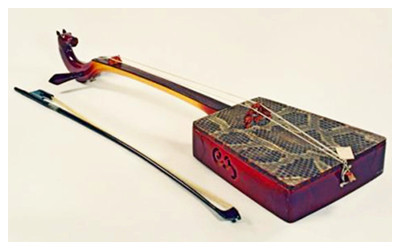 Matouqin is a representative musical instrument of the Mongolian nation. It not only occupies a place in China and the world's musical instrument families, but also a favorite instrument of folk entertainers and herdsmen. Life and prairie style.
Legend of Matouqin
According to the legend, once upon a time, there was a cowboy named Suhe who took care of a lost white horse in the grassland. In the Nadam Fair then, Suhe won the horse-racing with his little white horse. However, he never thought that the rude and unreasonable chieftain would forcefully remove him off his horse. The little white horse shook off the chieftain in an attempt to find his little master—Suhe. The ruthless chieftain sent somebody to shoot the little horse die. Suhe was so grieved that he made a musical instrument with the bones of the white horse and carved a head which resembles that of the little white horse on the top of the instrument. He spent the rest of his life with the musical instrument ever after.
 Ask Questions ?